
How to Create a Charcuterie Board

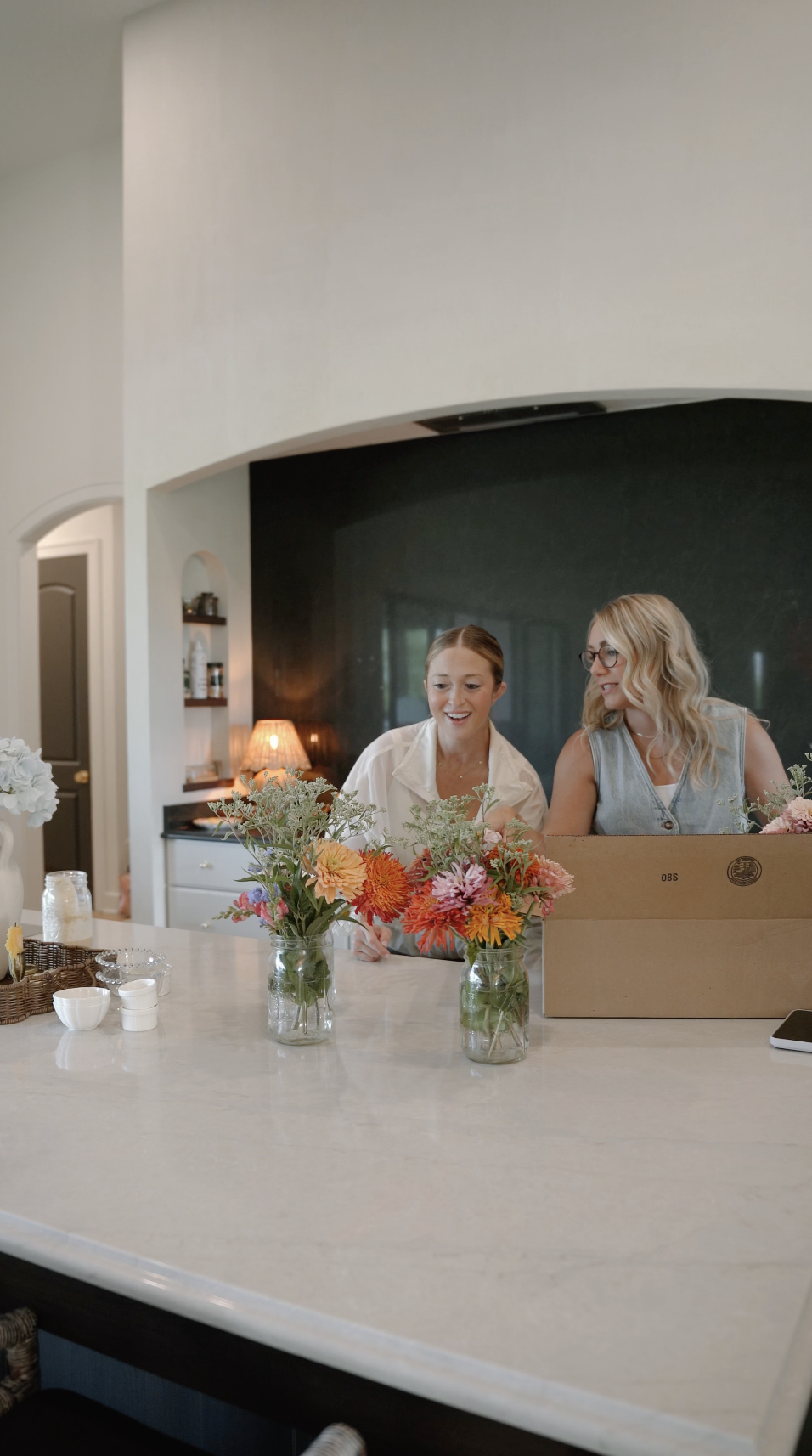
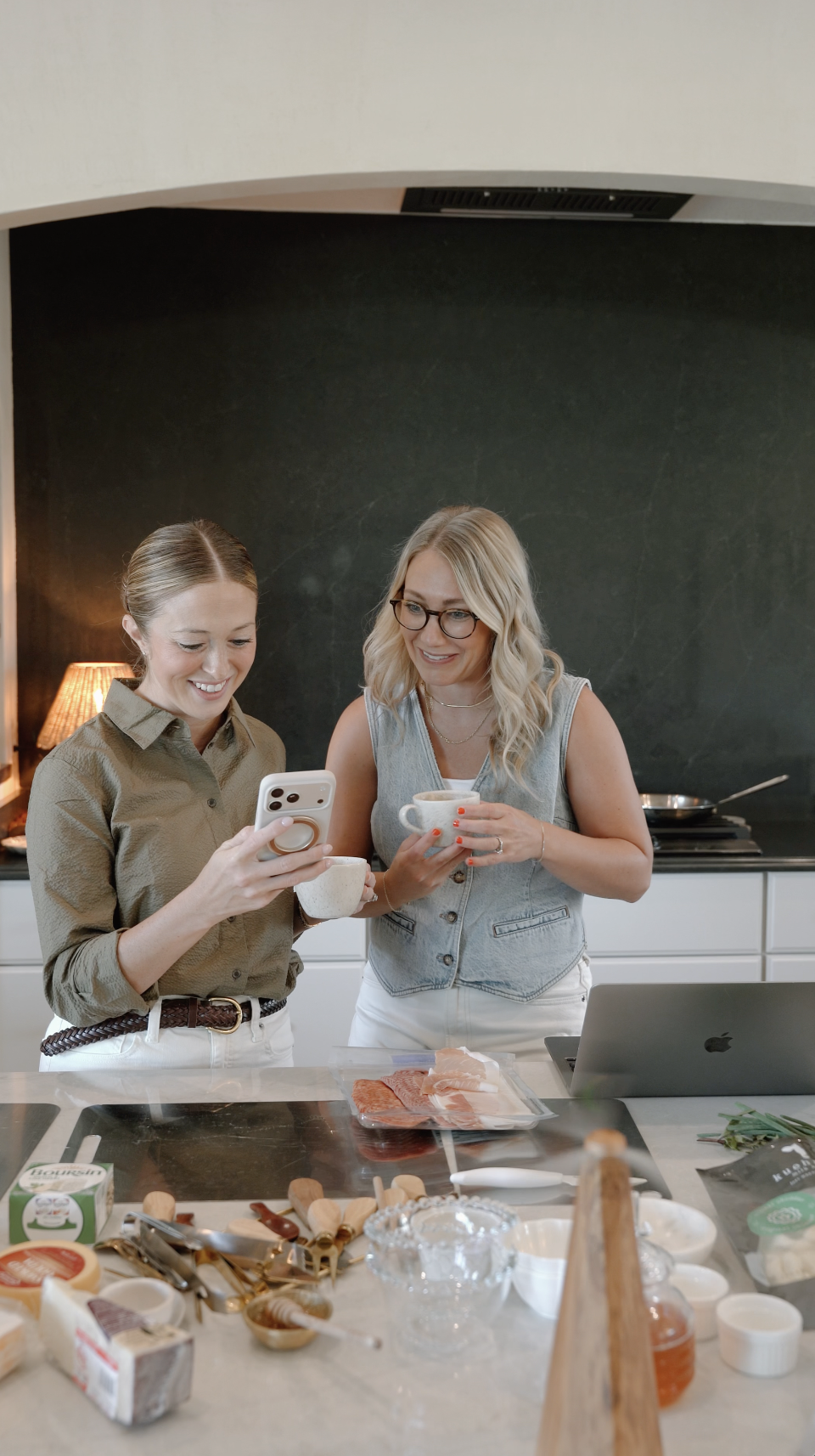
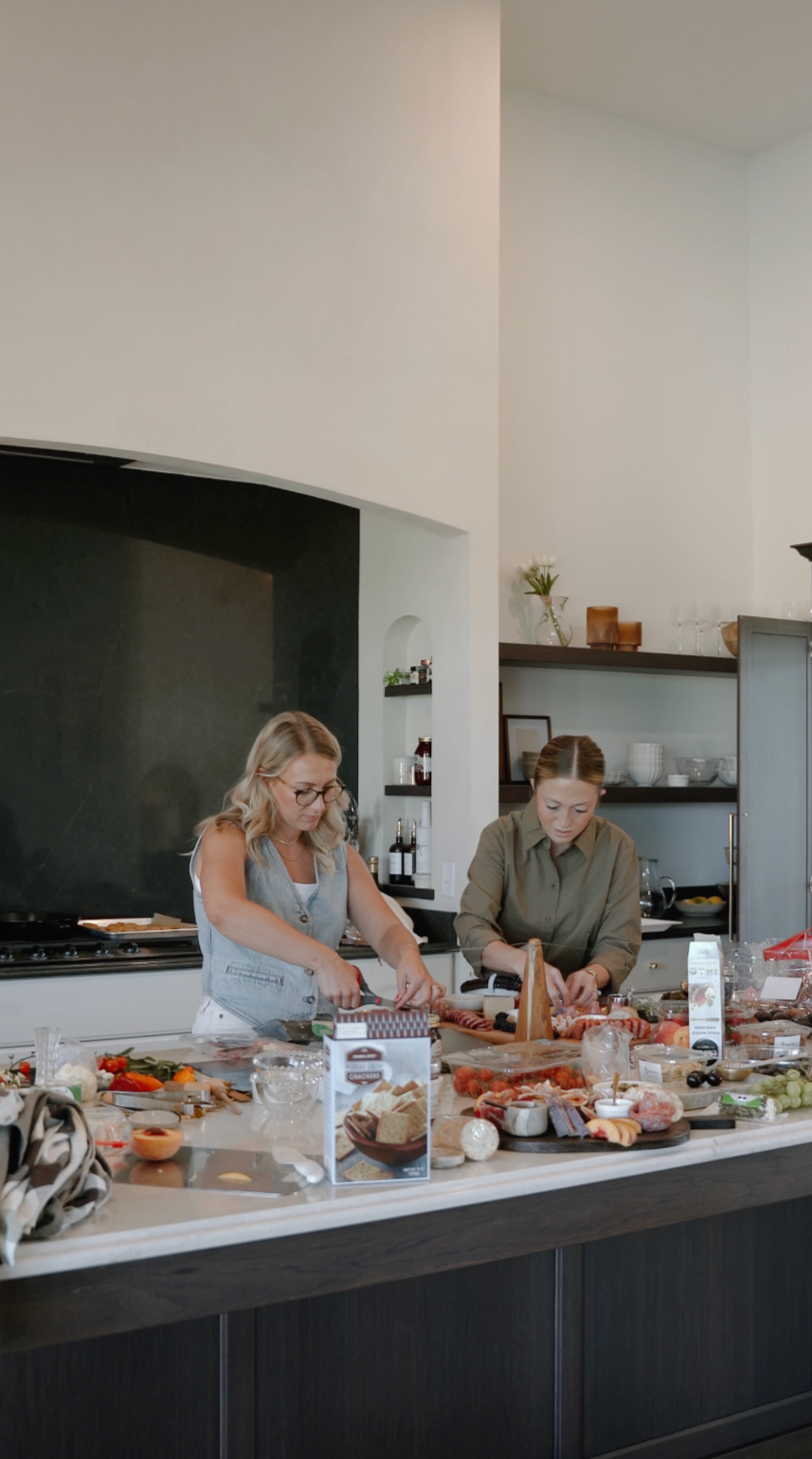
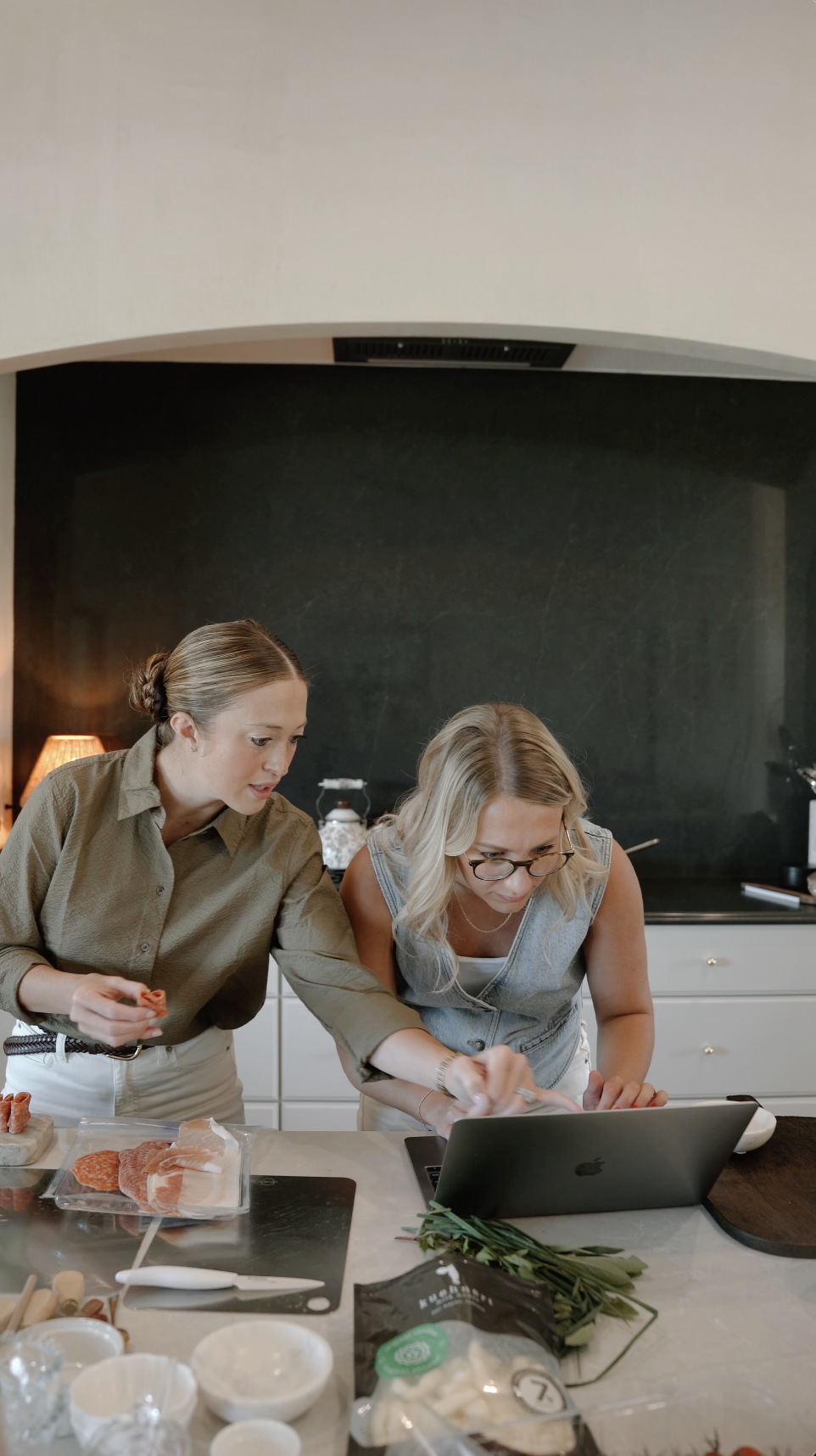
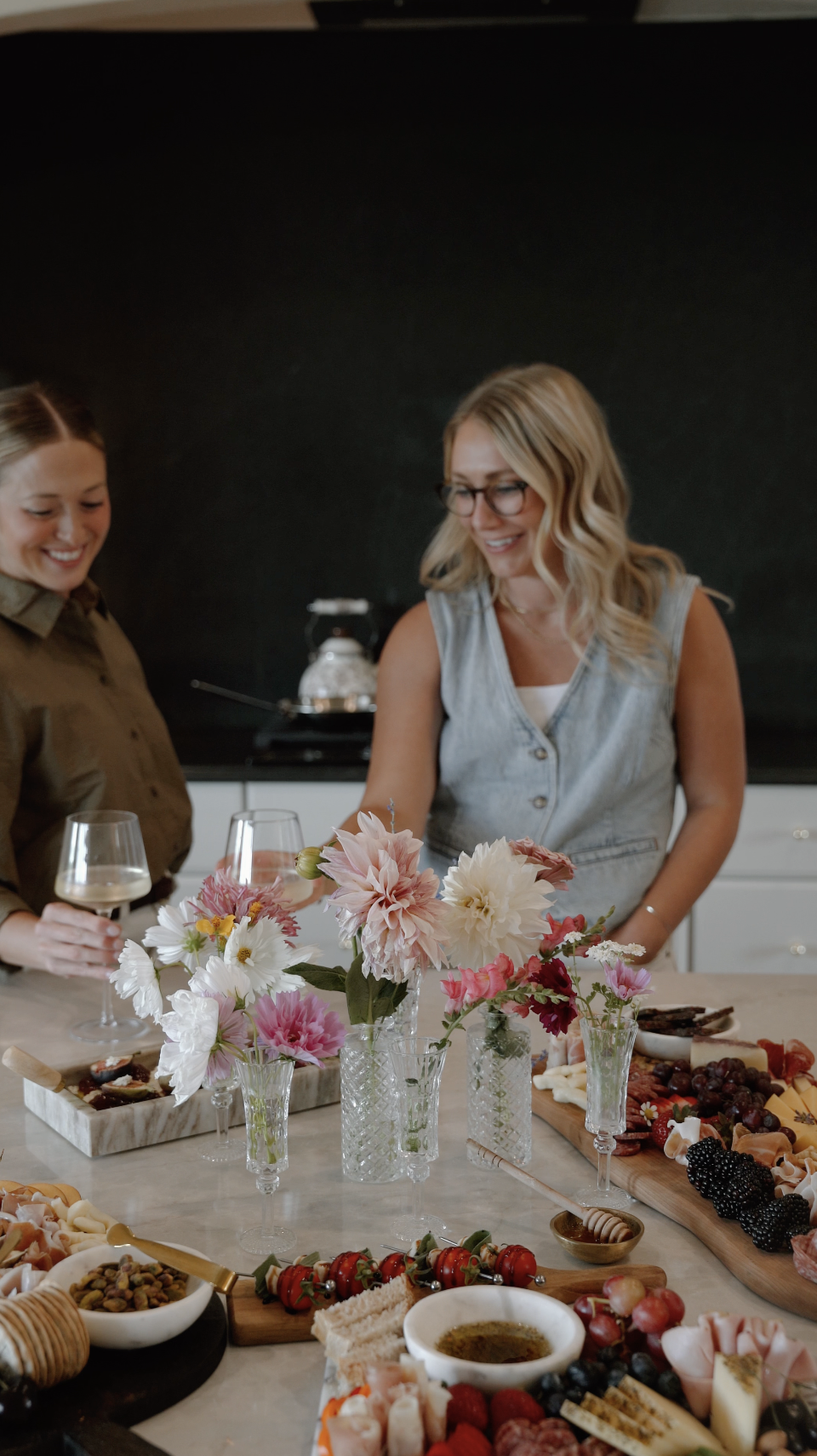
My friend and I spent five hours in the kitchen with no plan, no party or event, and no reason…just the desire to create something fun and beautiful! It was simple, messy, and the most refreshing kind of creative reset. Some might call it a grazing board, but whatever you call it, it was just a really good excuse to play with food.
If you’ve ever wanted to make a charcuterie board but felt unsure where to start, go to Pinterest and get inspired! Save a few boards you’re drawn to, notice the colors, shapes, ingredients, and styling you love, then use them as inspiration to make it your own.
Here’s what we learned!
1. Start with Your Base
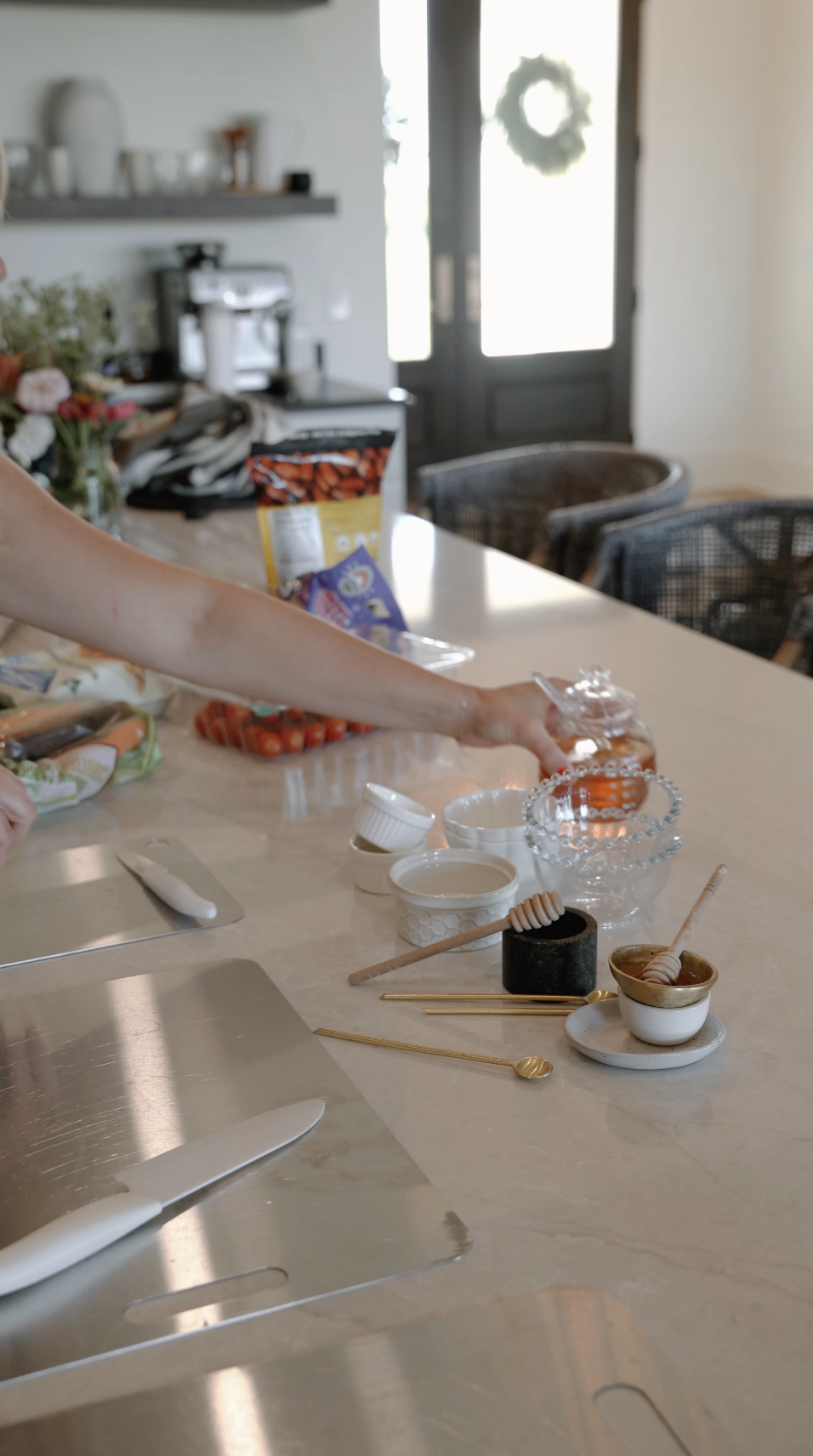
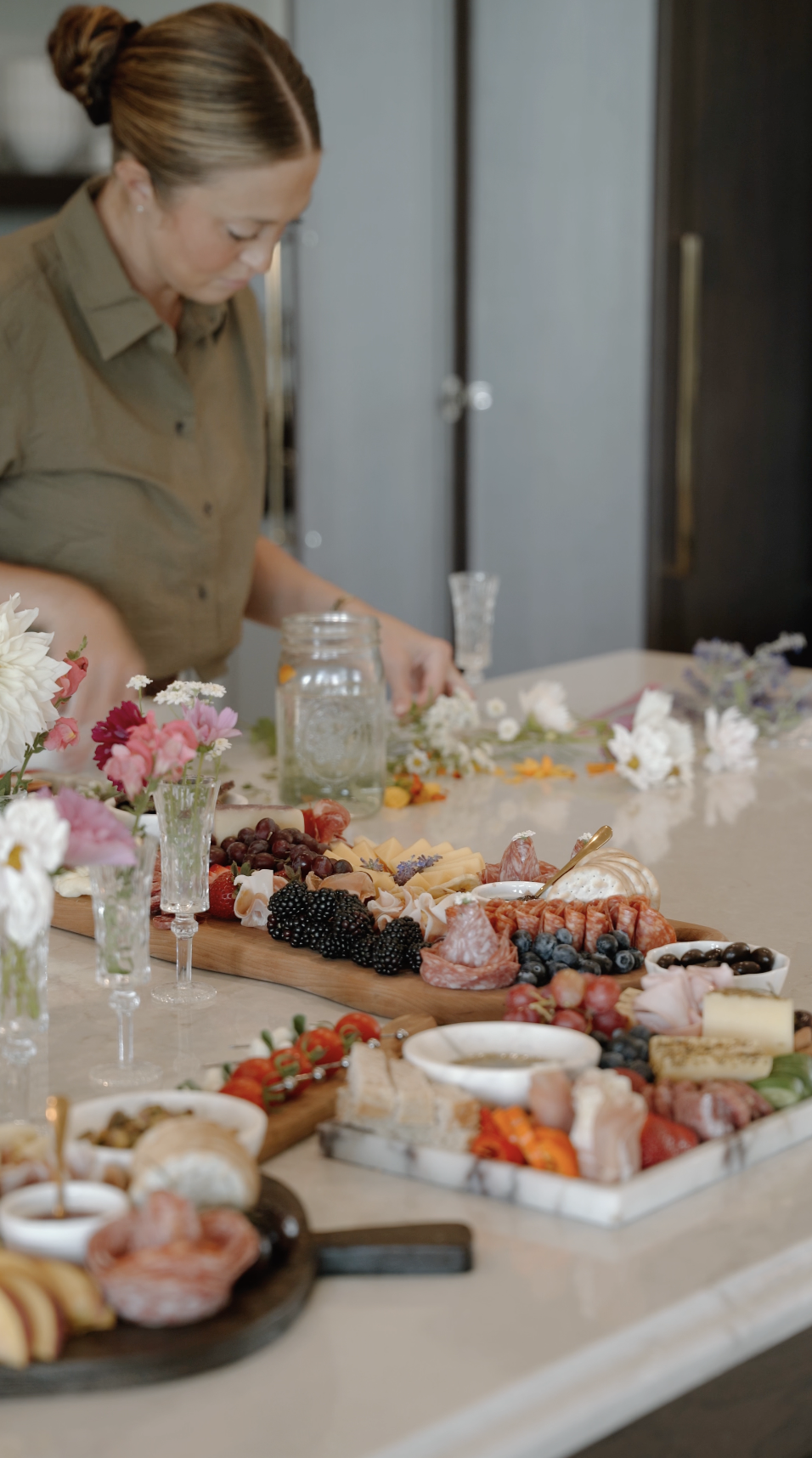
We pulled out everything, wood boards, marble slabs, small bowls, utensils, and mixed and matched what we liked. Different sizes, shapes, tones, and materials made it feel more interesting.
Choose a board you have enough ingredients to fill, then gather a few small bowls and serving utensils for jams, dips, drizzling, spreading, and grabbing. These can be placed throughout the board as you build to add height and break things up.
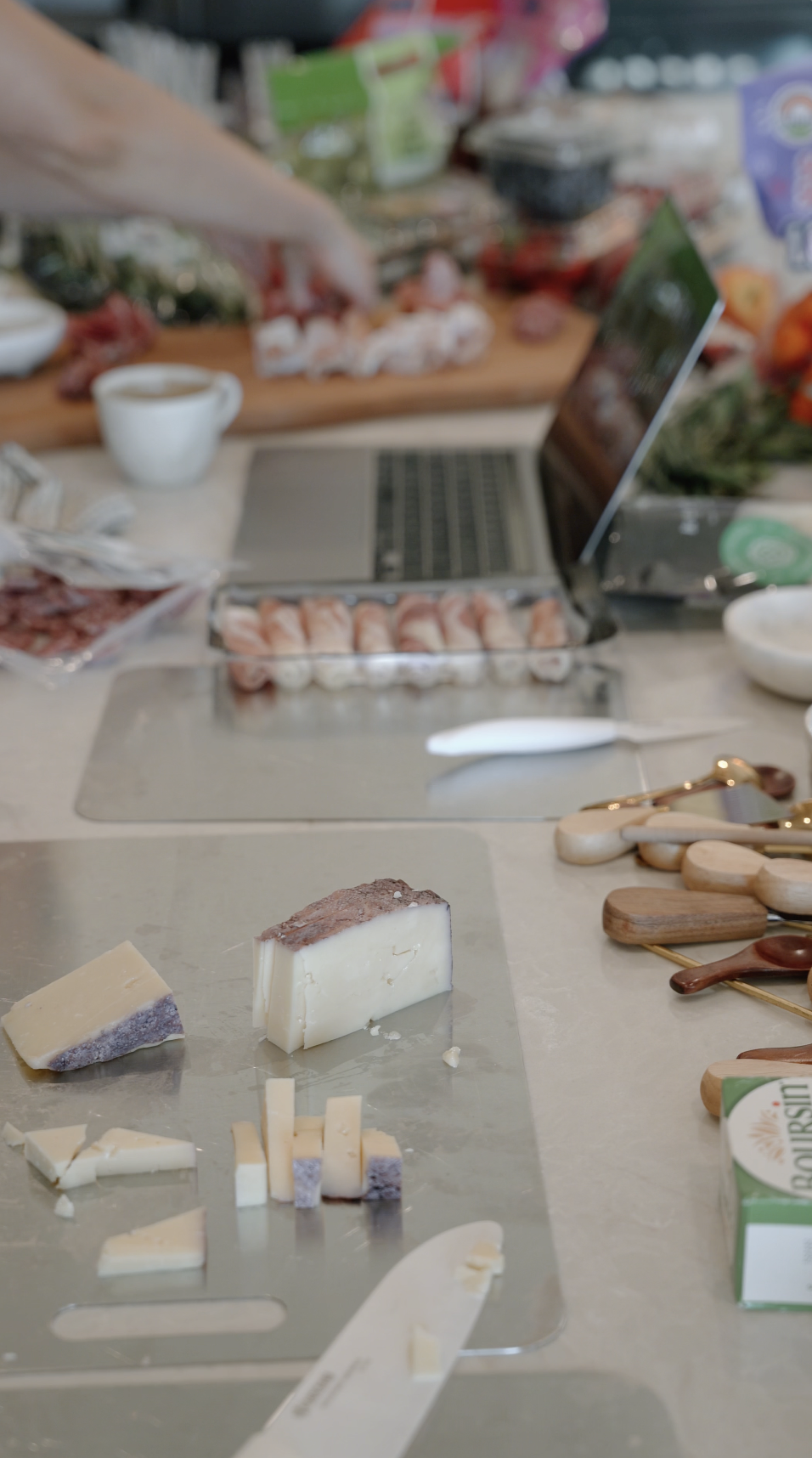
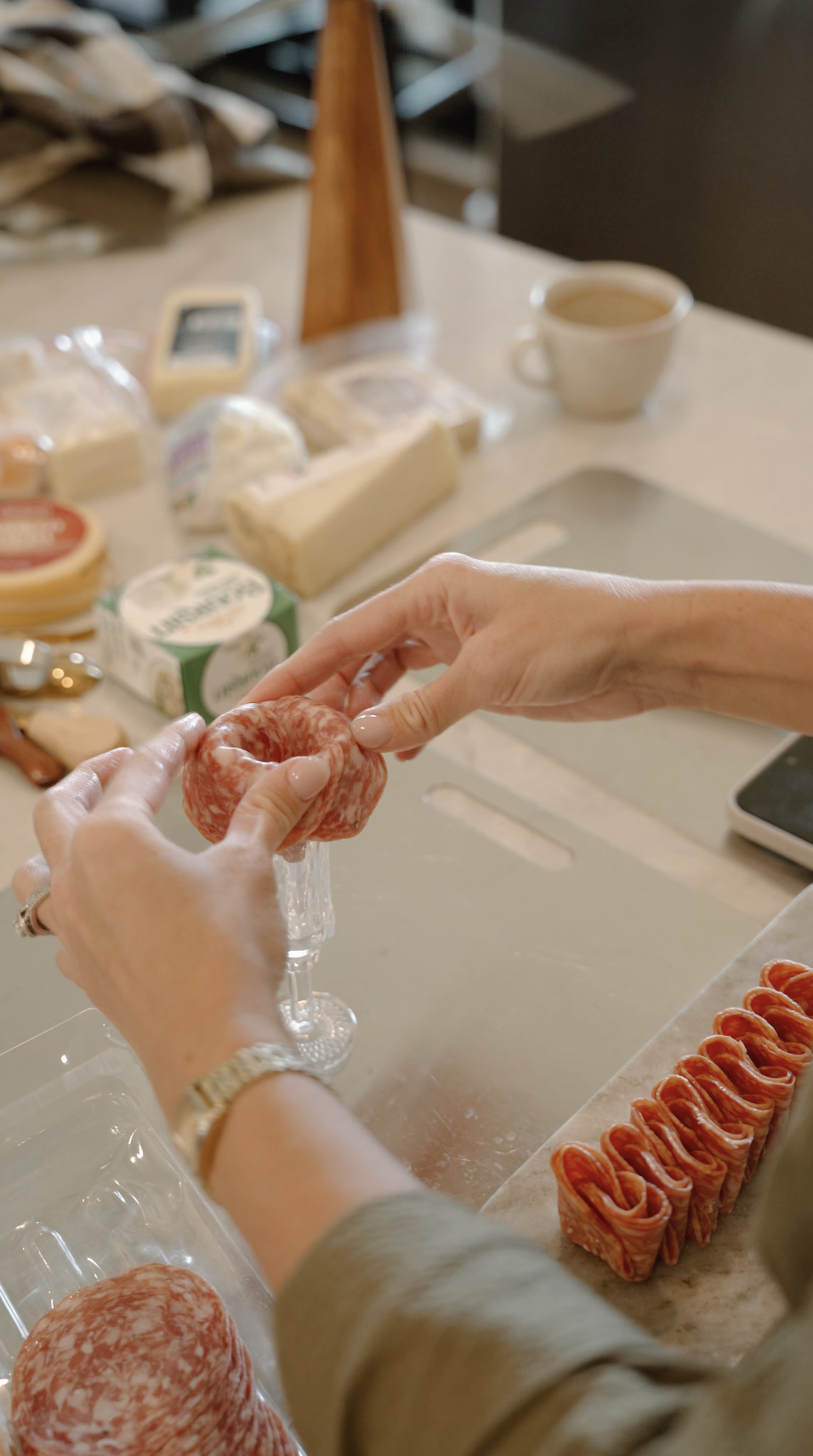
2. Build Your Foundation: Meats + Cheeses
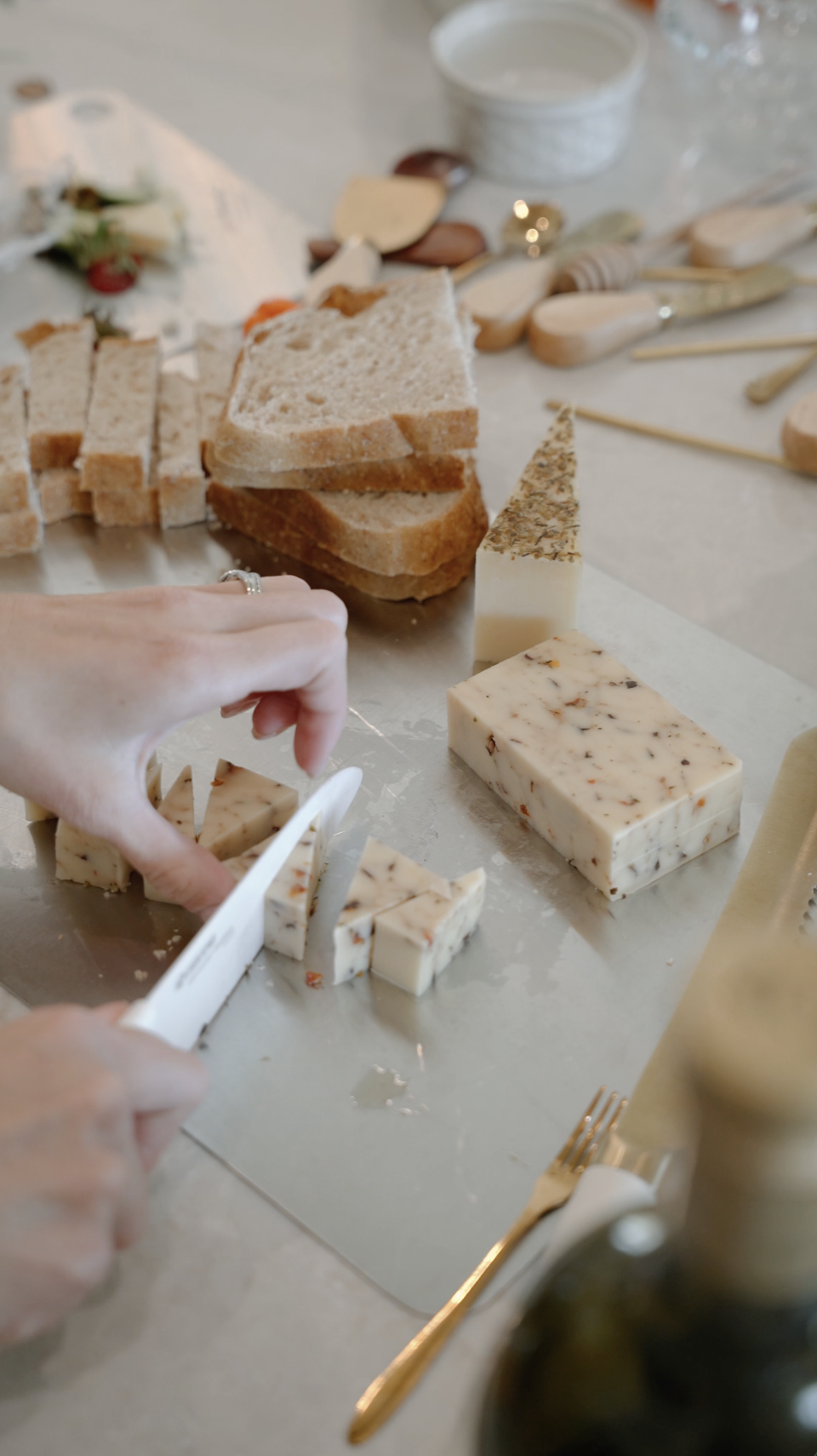
We started with meat and cheese as the foundation of each board. You don’t need to be an expert or choose one from every category. We honestly browsed what looked and sounded good, then tried to find a mix of textures, flavors, colors, and shapes.
Where to shop:
Grocery stores like Trader Joe’s or Costco for variety + value
Local co-ops or specialty cheese shops
Butcher counters or small local markets for unique finds
Cheeses (3–5 types):
Soft: brie, burrata, camembert, goat cheese
Semi-soft: havarti, fontina, pepper jack, young gouda
Firm: sharp white cheddar, aged gouda, manchego, Gruyère, Asiago, Pecorino Toscano
Hard: well-aged Pecorino Romano, parmesan
Something bold or interesting: Syrah or wine-rubbed cheese, smoked gouda, blue cheese, herbed cheese, peppered cheese, or fruit-studded cheese
Meats (2–4 types):
Prosciutto
Genoa salami
Soppressata
Coppa or capocollo
Pepperoni
Calabrese or spicy salami
Something peppered, seasoned, or flavored
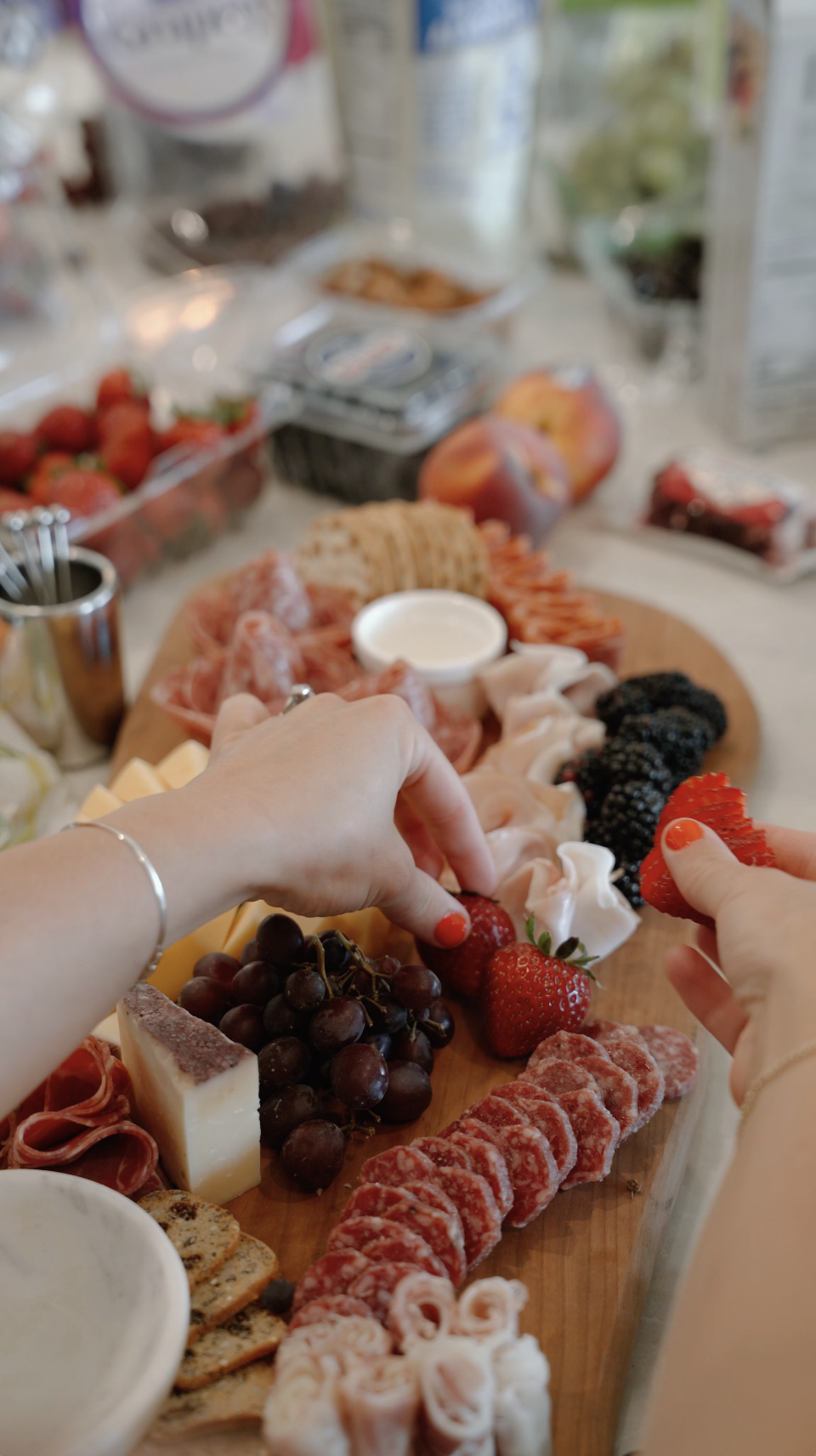
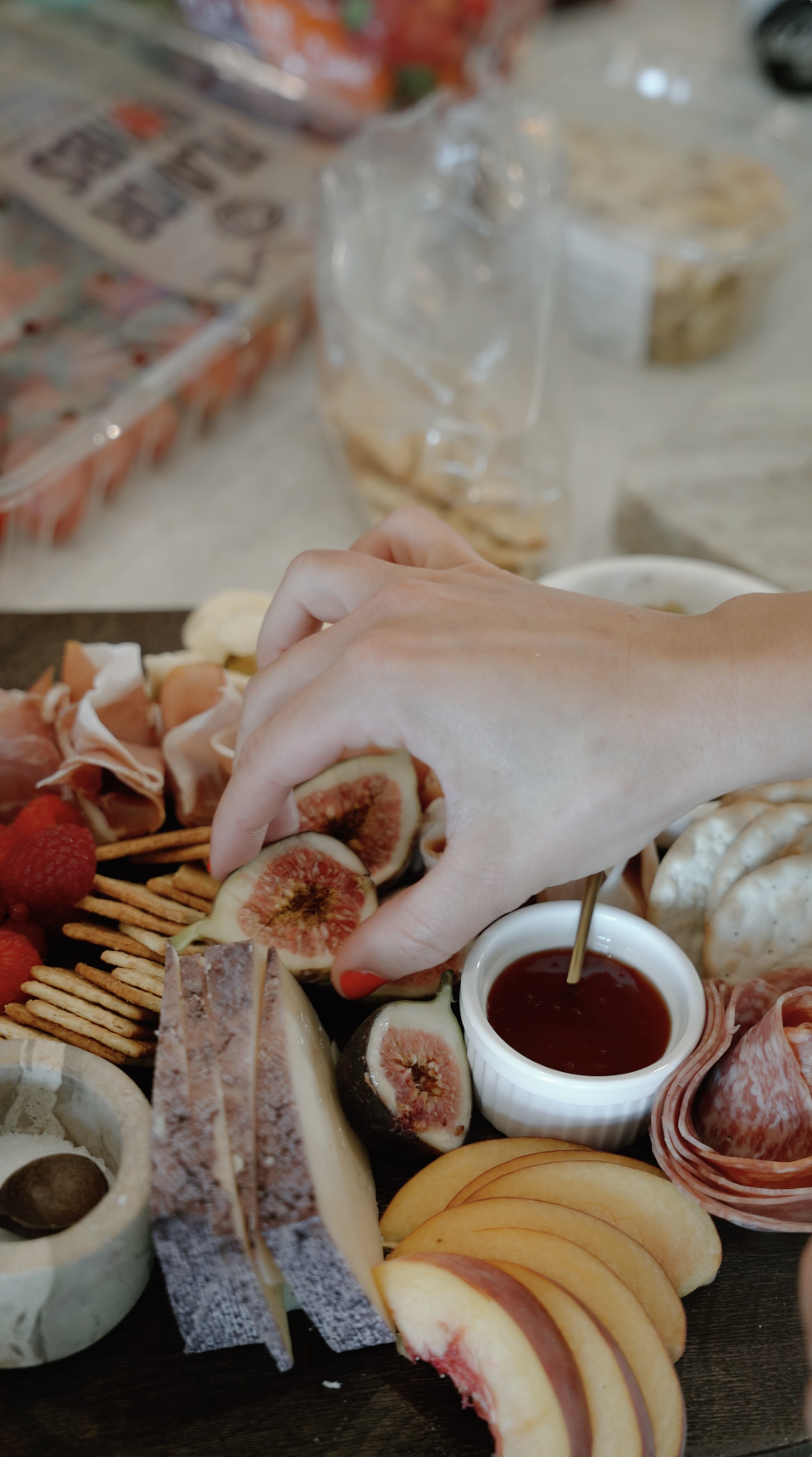
What we learned: You don’t need tons of different cheeses and meats to create variety. Even the same ingredients can look completely different depending on how you prepare and arrange them.
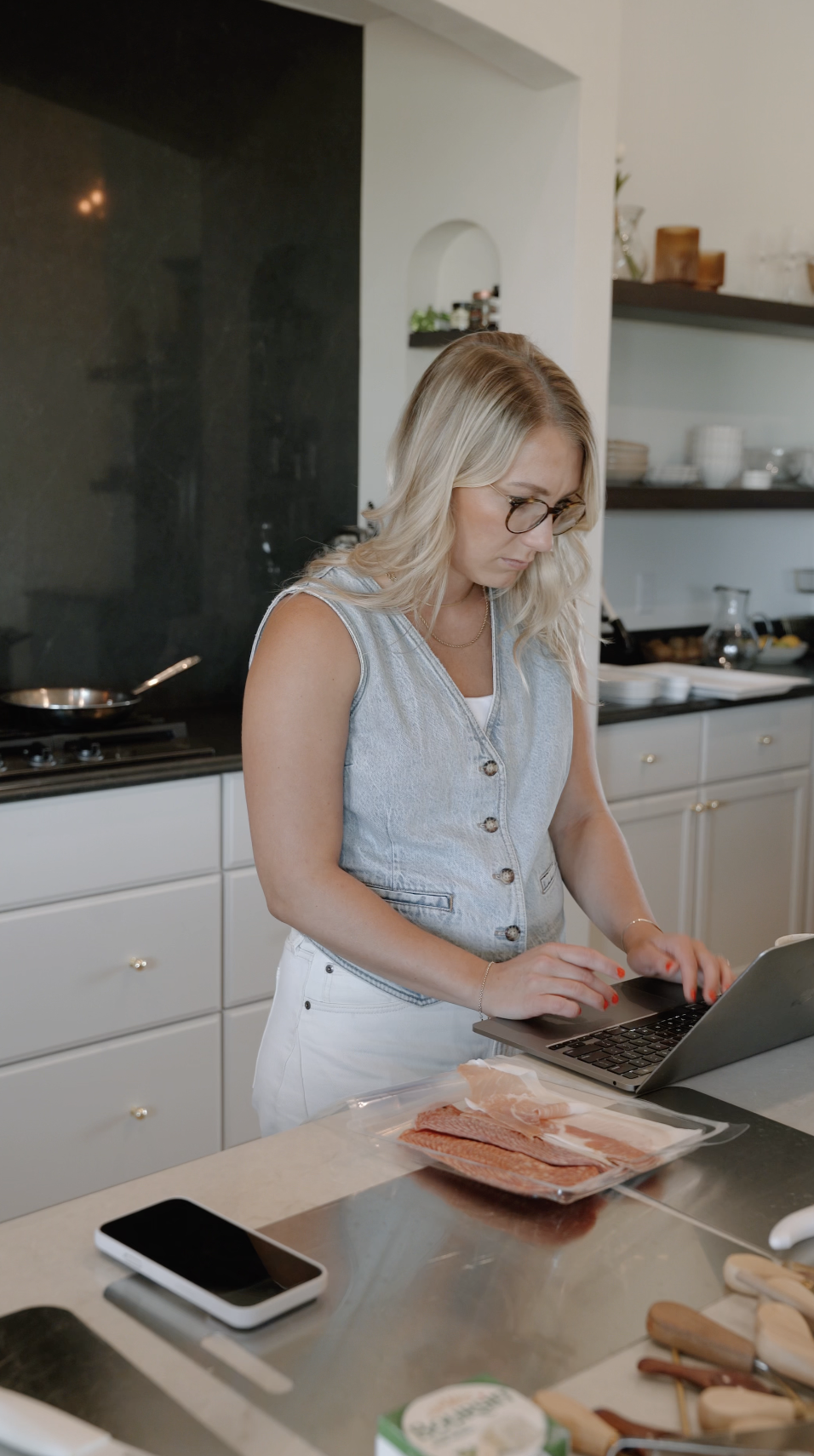
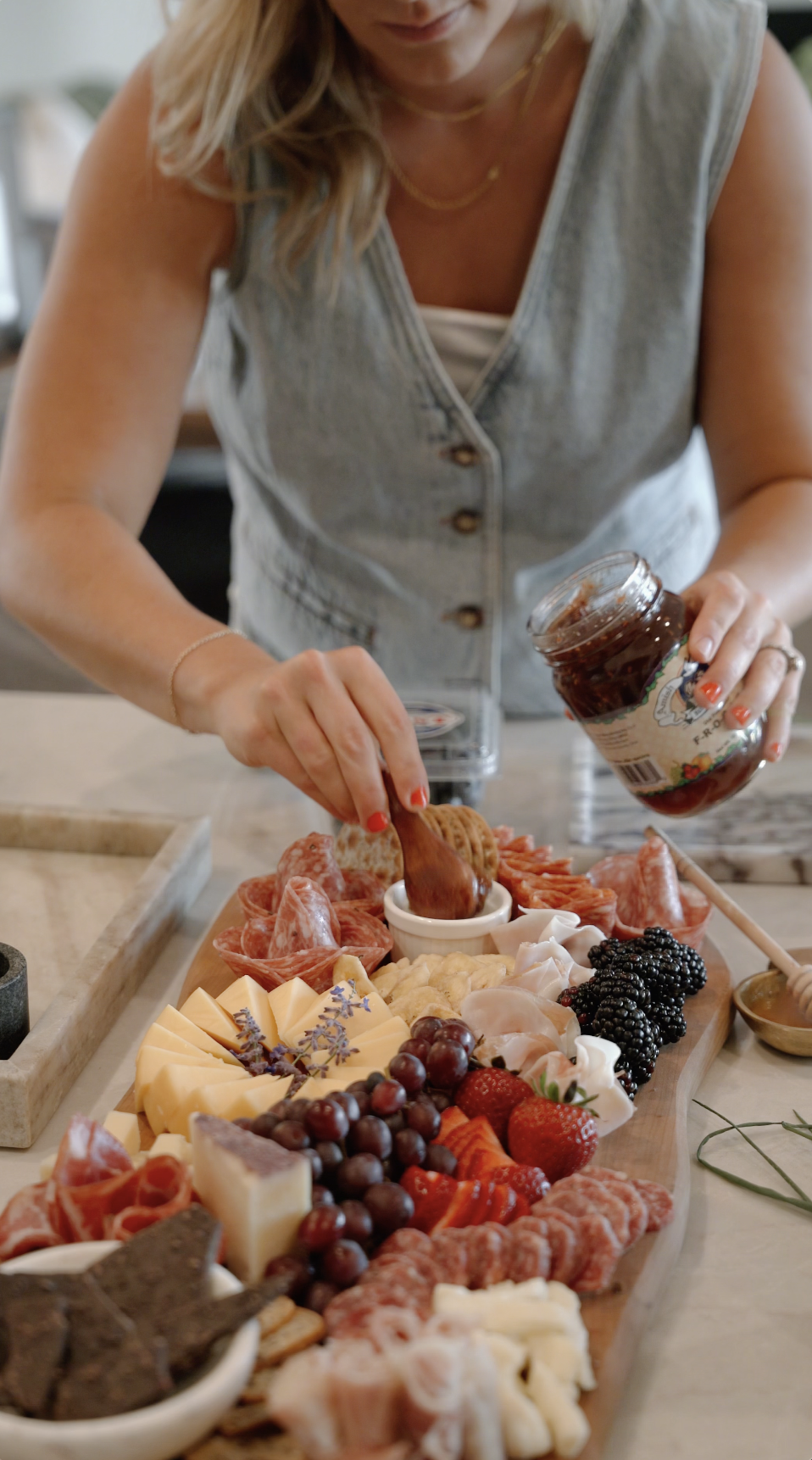
3. Add Variety + Balance
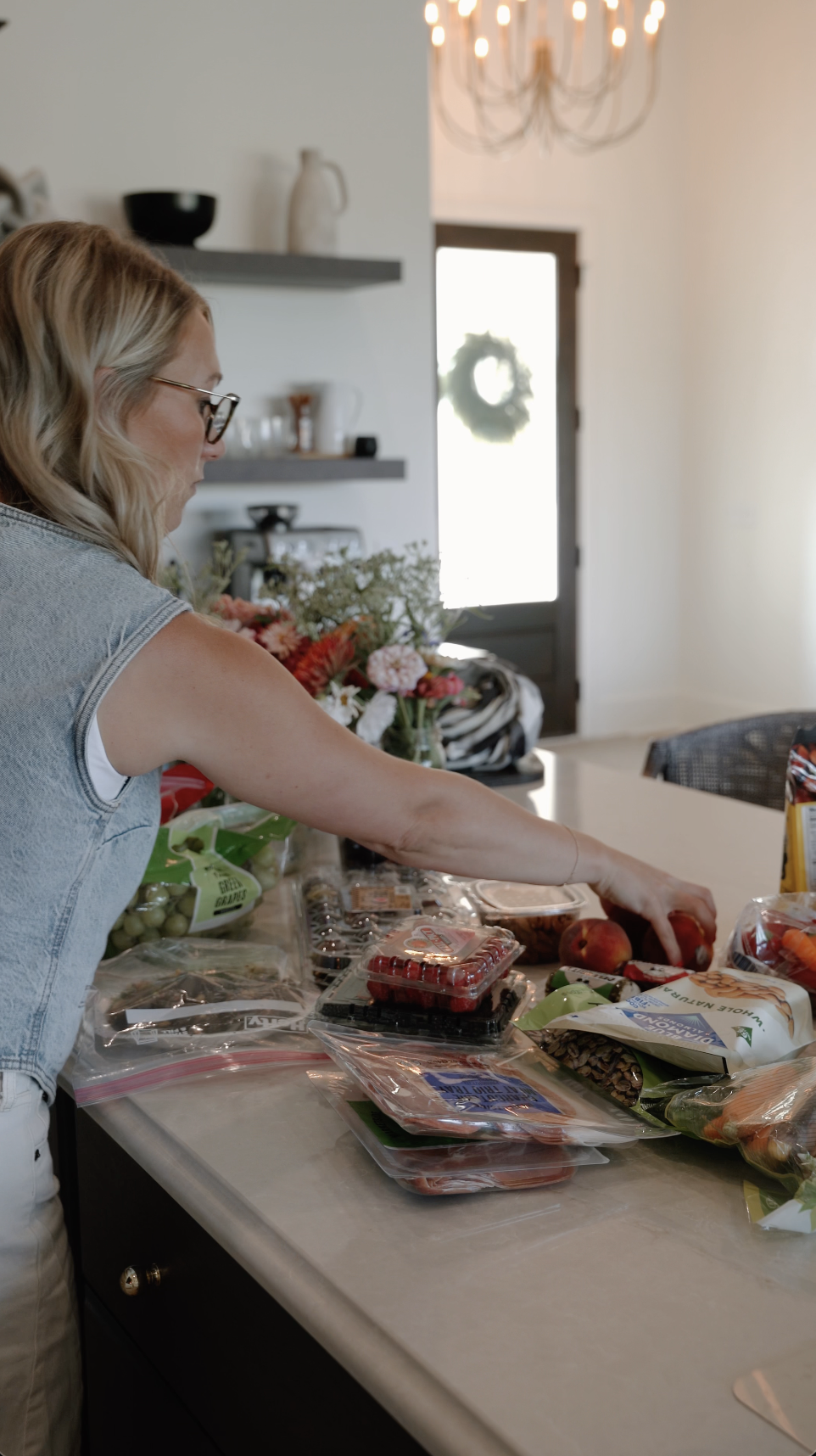
Once you have your meat and cheese, start adding variety! Raid your pantry and fridge before buying everything new. You might be surprised by how much you already have.
Think about including a mix of:
Fresh: grapes, berries, figs, apples, pears, cucumbers, tomatoes, snap peas, peppers, radishes
Crunchy: crackers, bread, nuts
Sweet: jams, honey, fruit spreads, chocolate
Briny: olives, pickles, pickled vegetables
Saucy + spreadable: grainy mustard, spicy jalapeño jam, olive oil and herb dip, hummus or other dips
One of my favorite things we did was adding a variety of unique crackers, dips, mustards, and jams. Most of the board is made up of really simple ingredients, so these little additions are an easy way to introduce new flavors.
Aim for balance, something creamy, crunchy, fresh, sweet, salty, and briny.
4. Choose Your Focal Points + Start Building
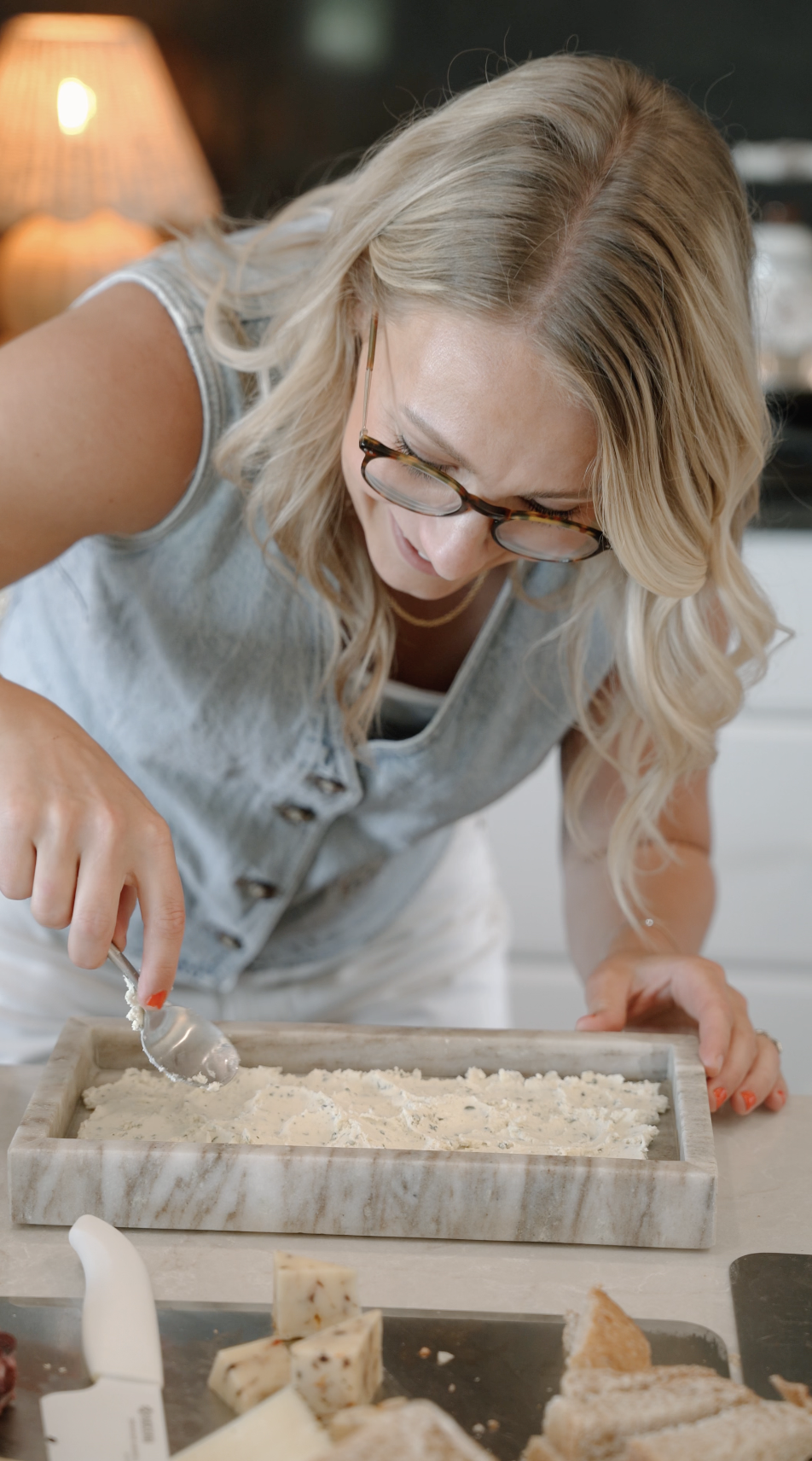
Before filling every inch of the board, decide where you want your eyes to go first. This could be a beautiful wedge of cheese, a small bowl of dip, a meat flower, or a spread-out cheese schmear.
Start with those larger elements, then build outward. We liked placing things slightly off-center and working in different directions instead of trying to make everything perfectly symmetrical.
5. Style with Intention
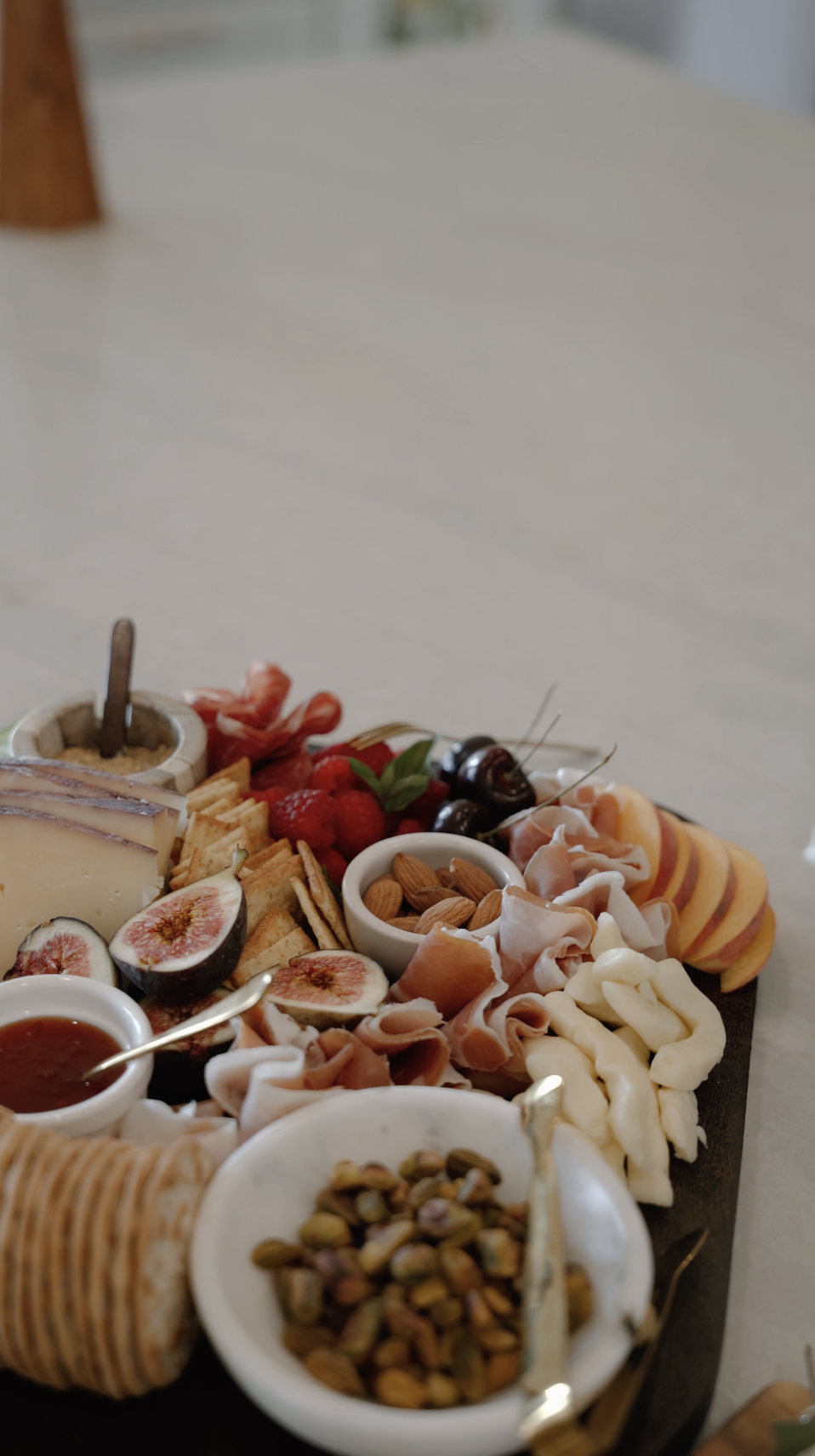
Look at the ingredients you already have and think about how you could cut, fold, break, stack, fan, spear, drizzle, or arrange them differently.
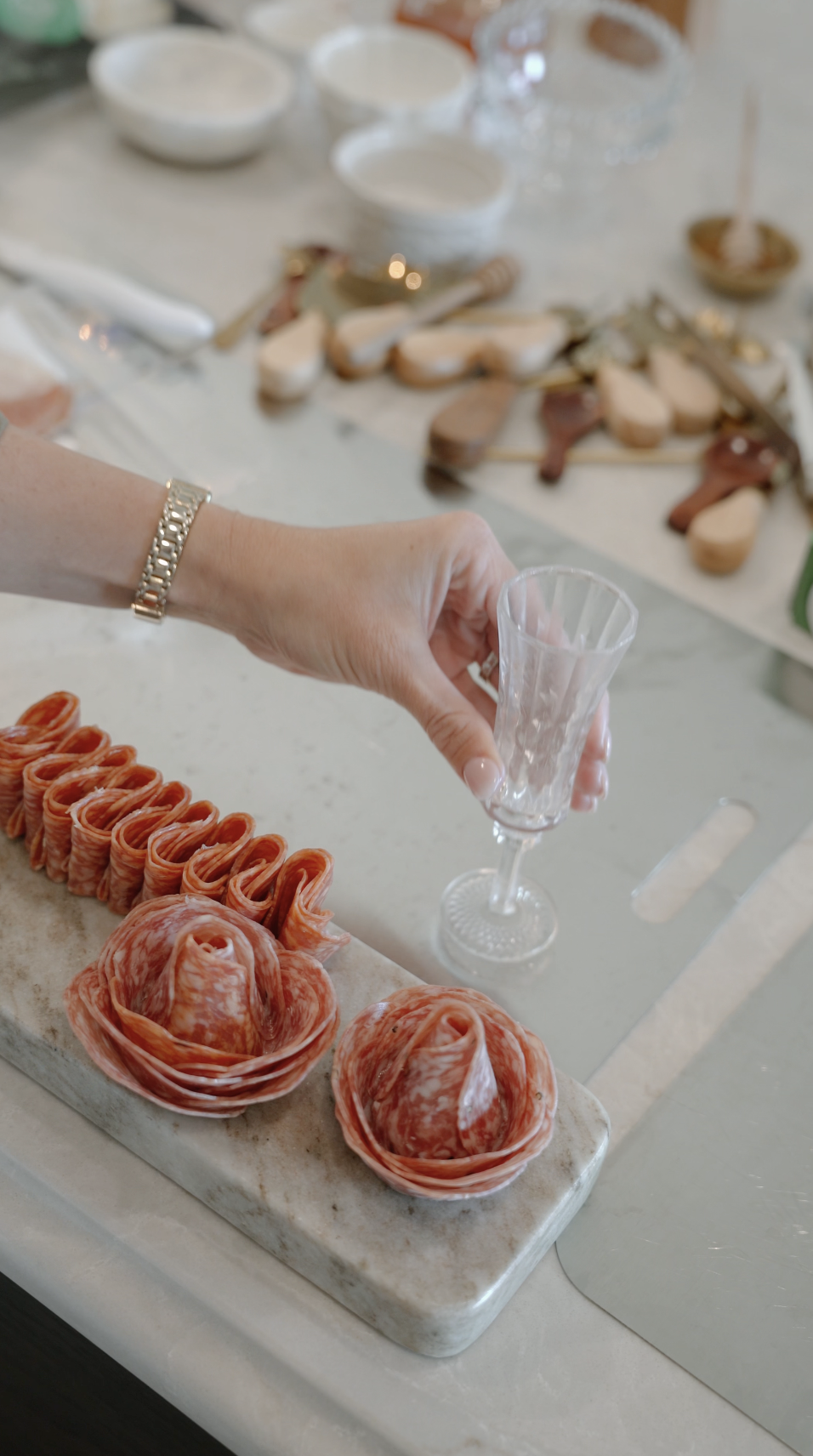
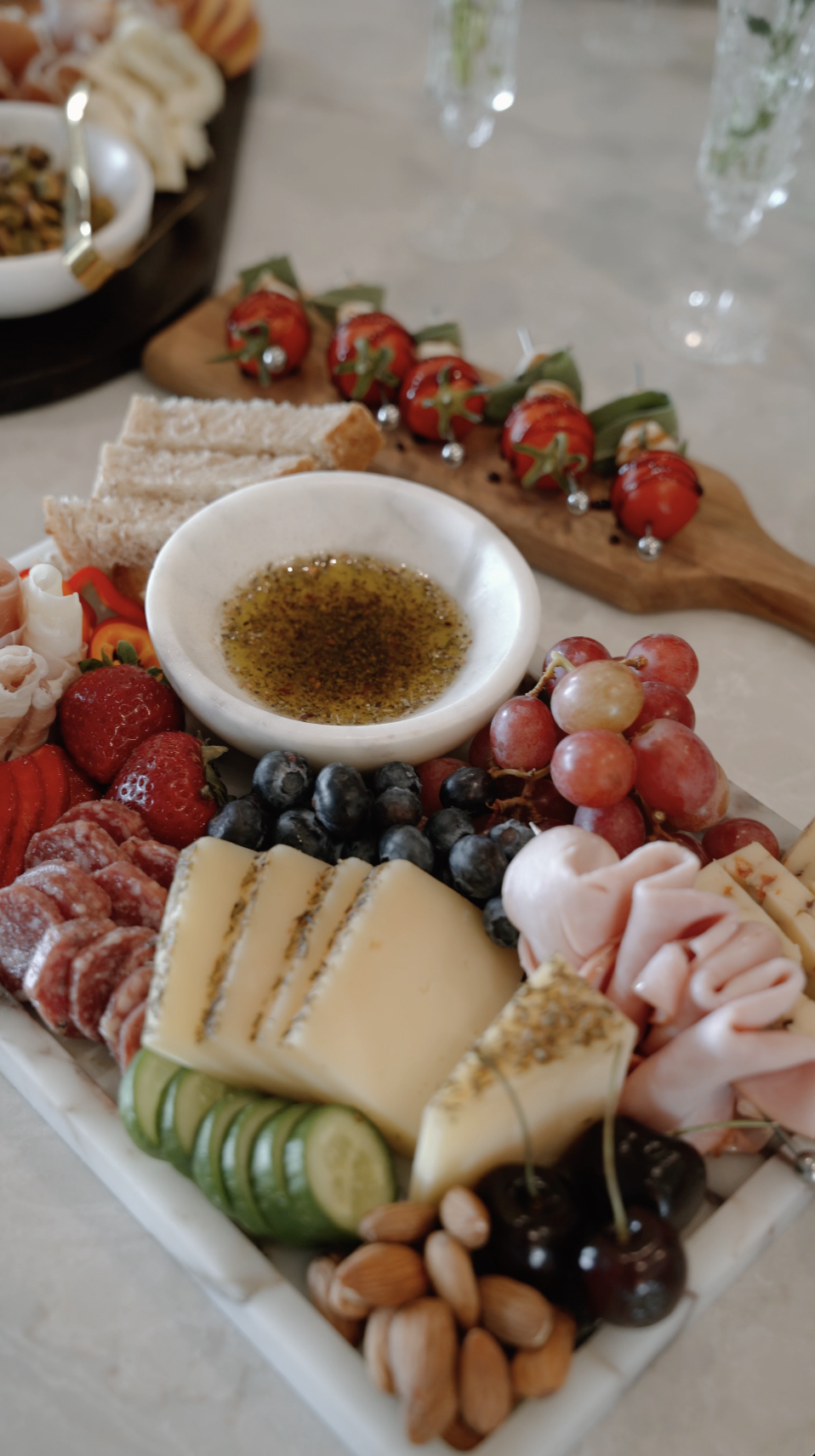
Meats: Fold salami into ribbons or quarters, roll prosciutto into loose bundles, create “meat flowers” around the rim of a glass, or fold thin slices accordion-style and secure with a toothpick.
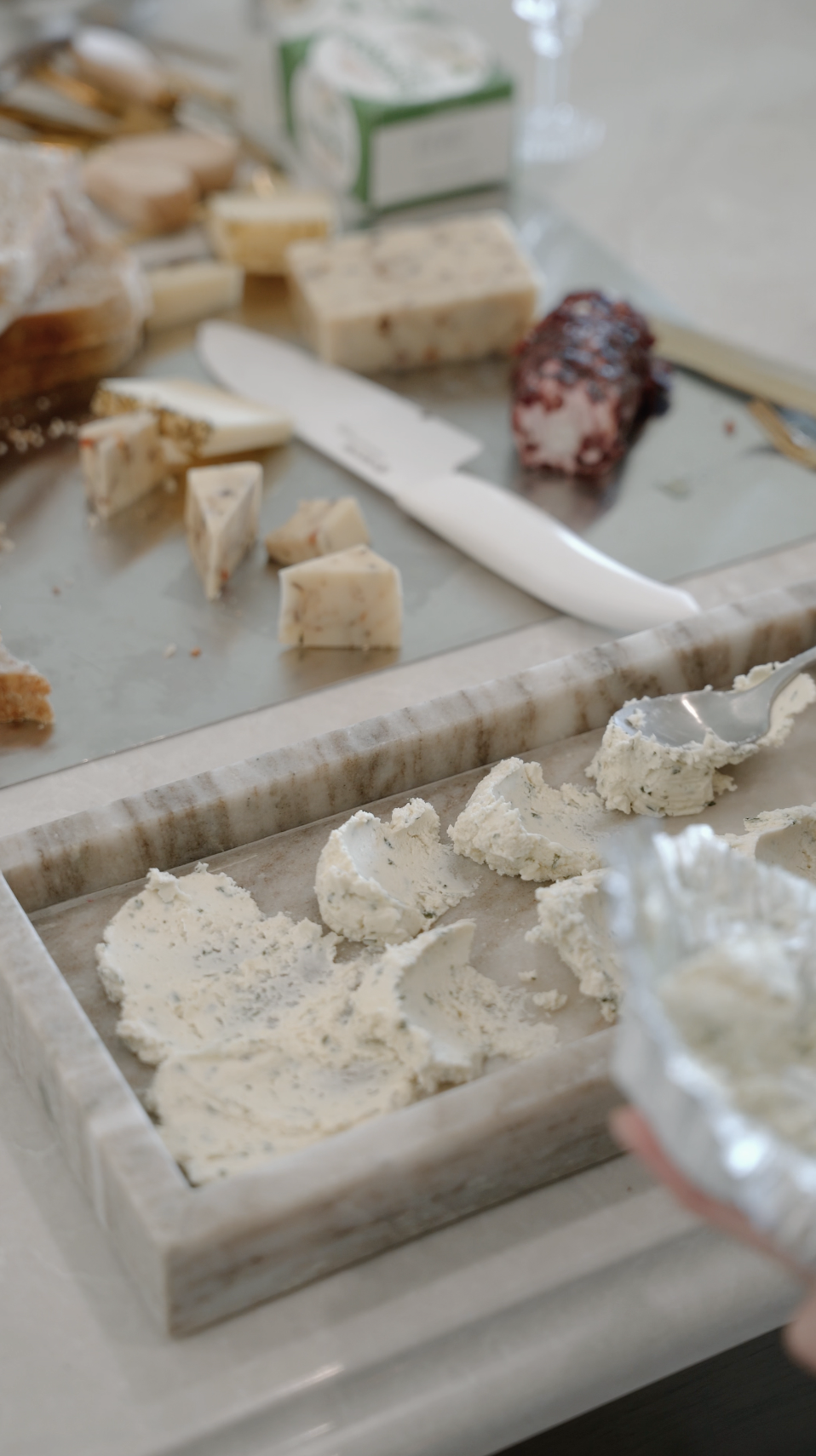
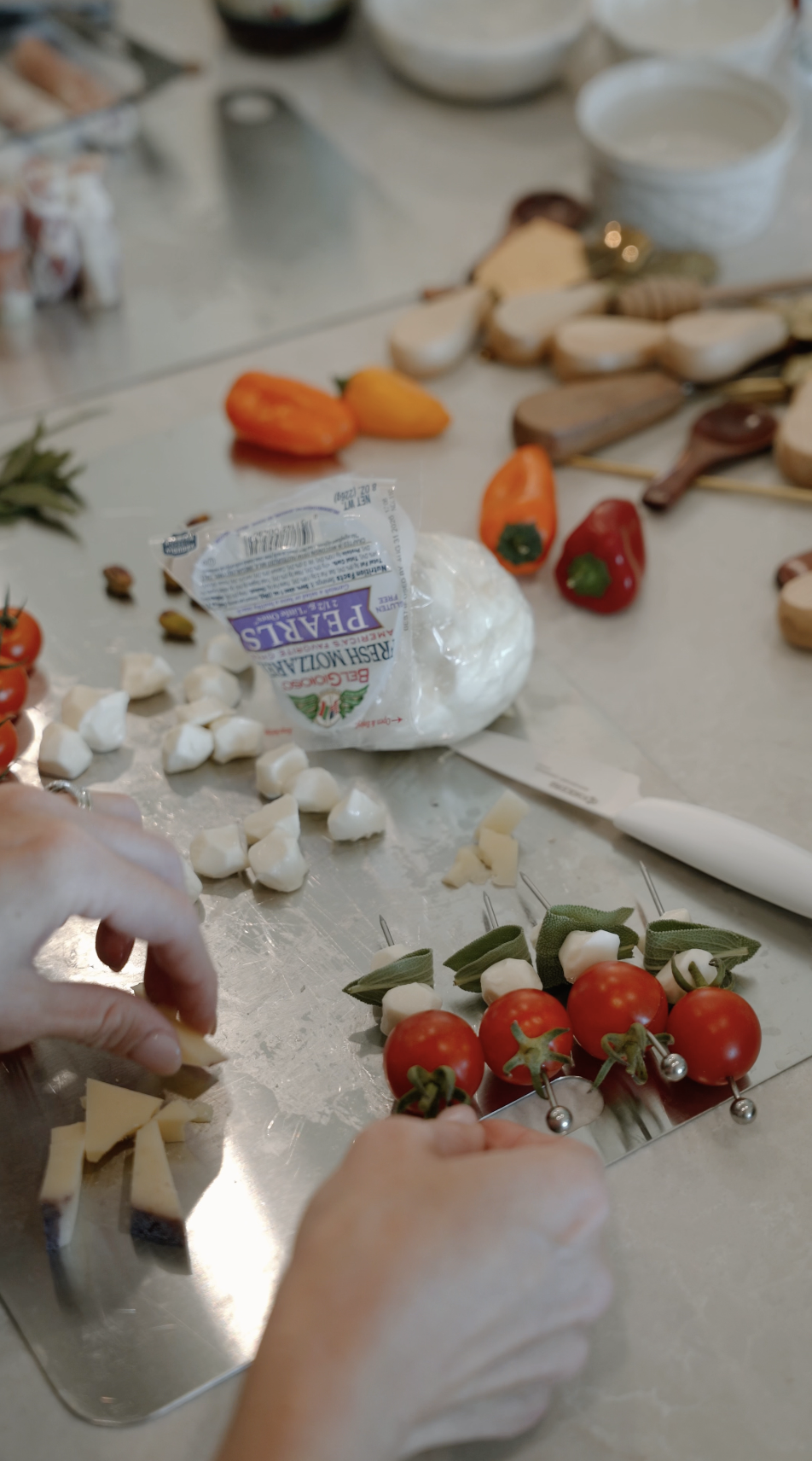
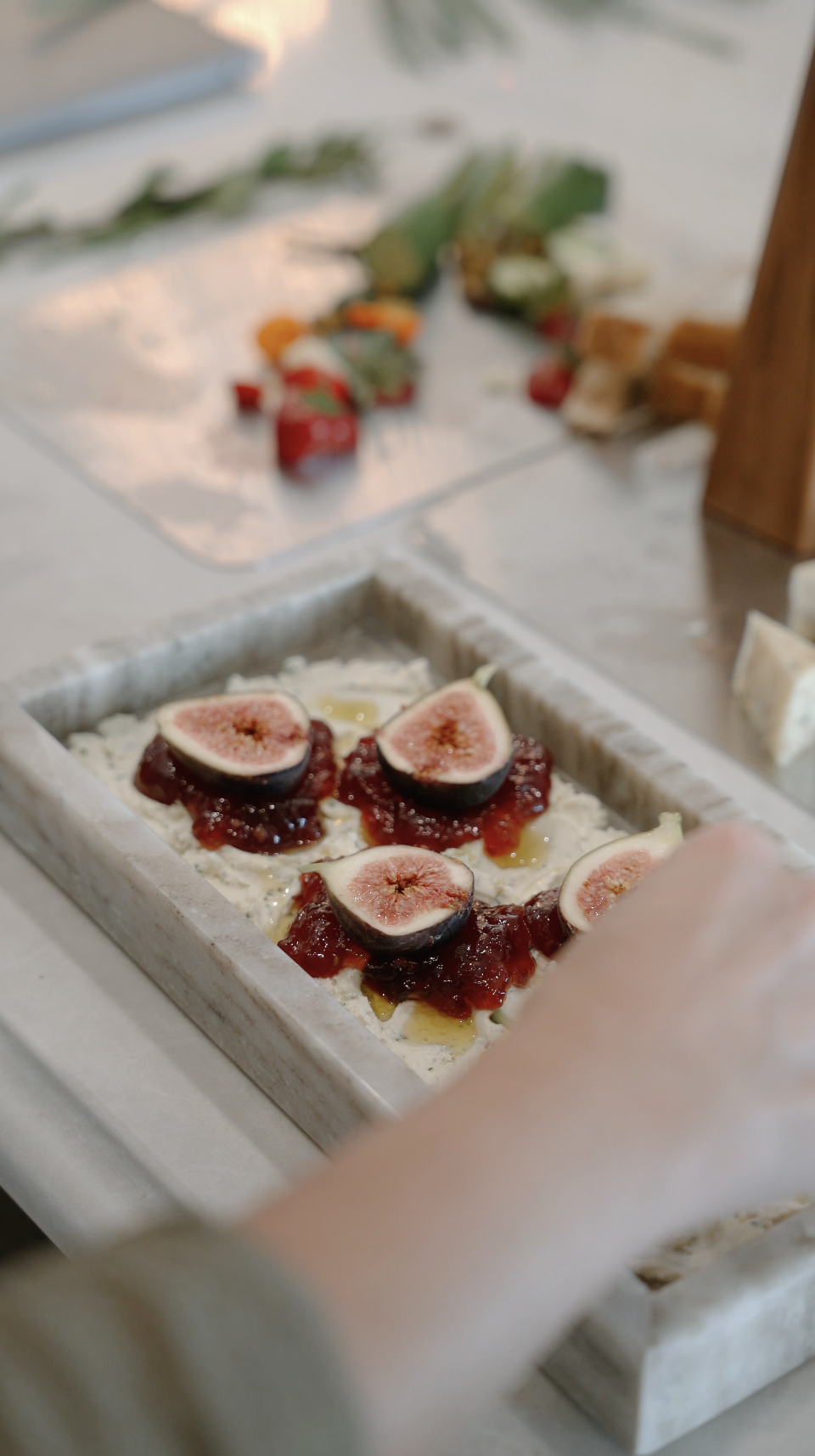
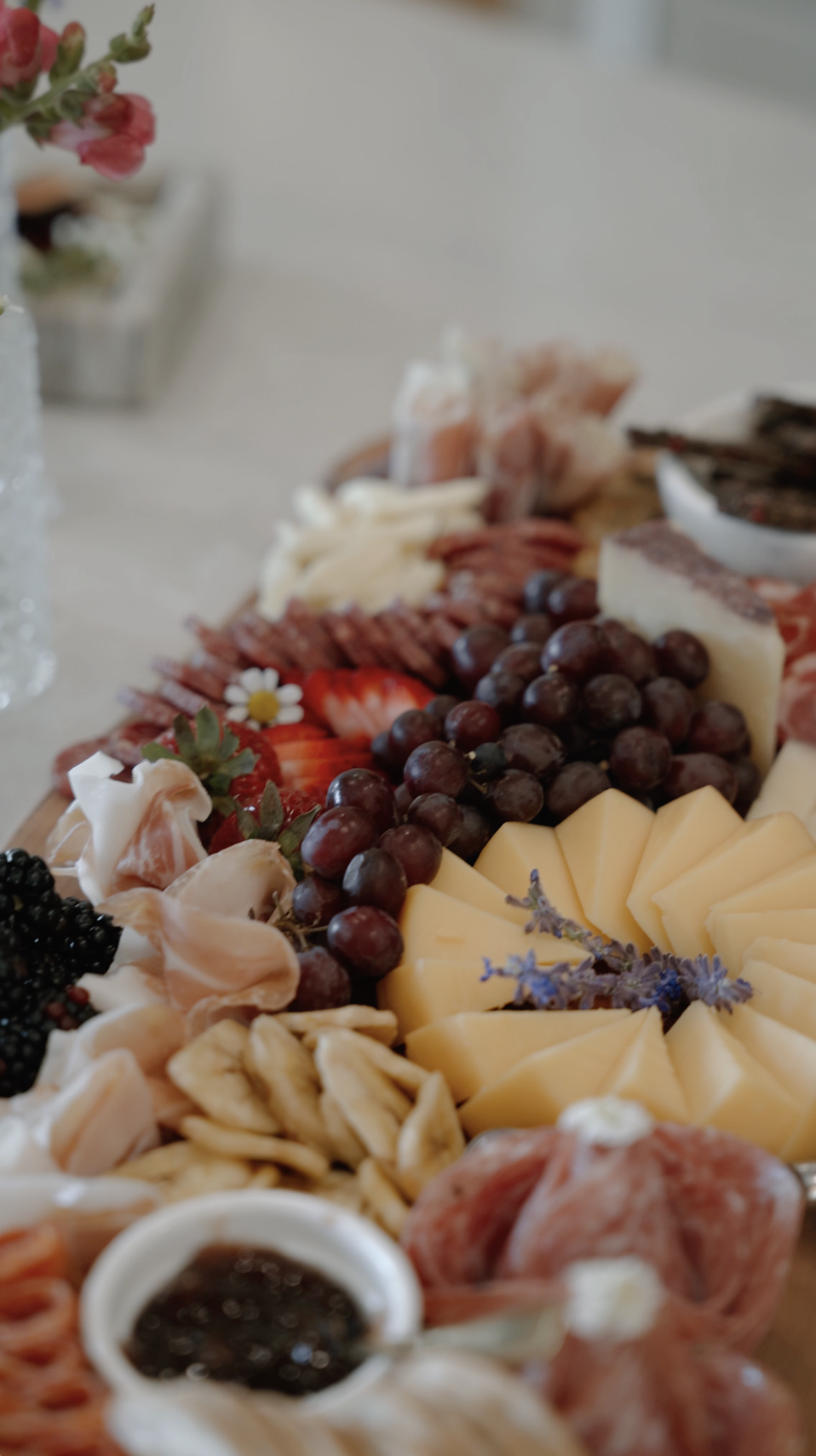
Cheeses: Slice some and leave others whole, break harder cheeses into imperfect chunks, or create a cheese schmear and layer it with fruit, jam or honey, olive oil, herbs or edible flowers.
Fruit: Leave some strawberries whole while slicing and fanning others, cut figs open to show off their centers, keep grapes in small clusters, or thinly slice and fan apples and pears.
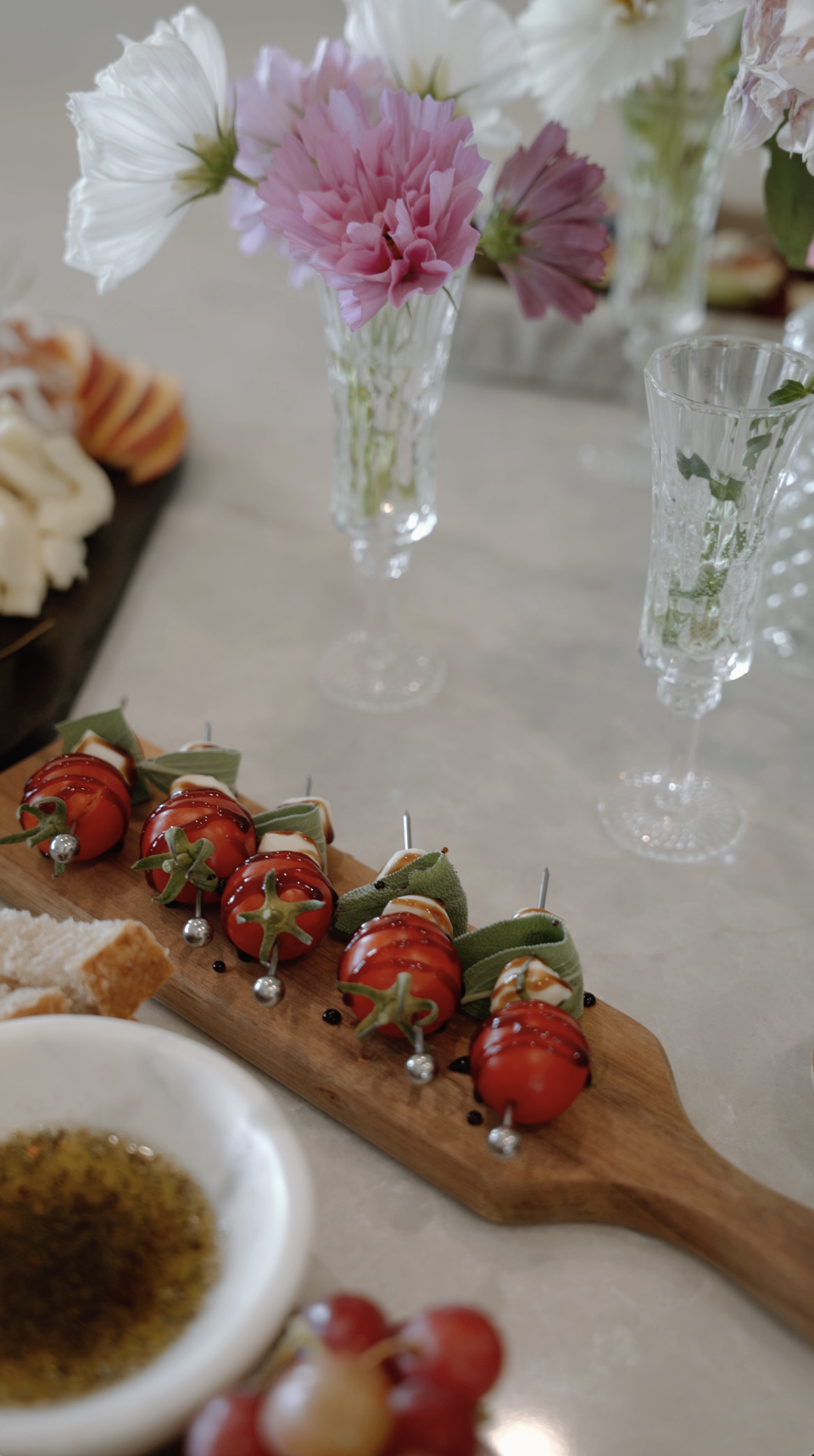
Veggies: Slice cucumbers into rounds or spears, ribbon them with a peeler, halve colorful cherry tomatoes, or turn mozzarella, tomato, and basil into little skewers.
Crackers + Bread: Stack, fan, overlap, or create curved rows with crackers. Slice baguettes on an angle or tear rustic bread into imperfect pieces.
Chocolate + Nuts: Break chocolate bars into uneven pieces, leave part of the bar intact, and pile or scatter nuts into smaller spaces.
Olives + Pickles: Add them to small bowls, scatter a few around the board, or spear them onto cocktail picks.
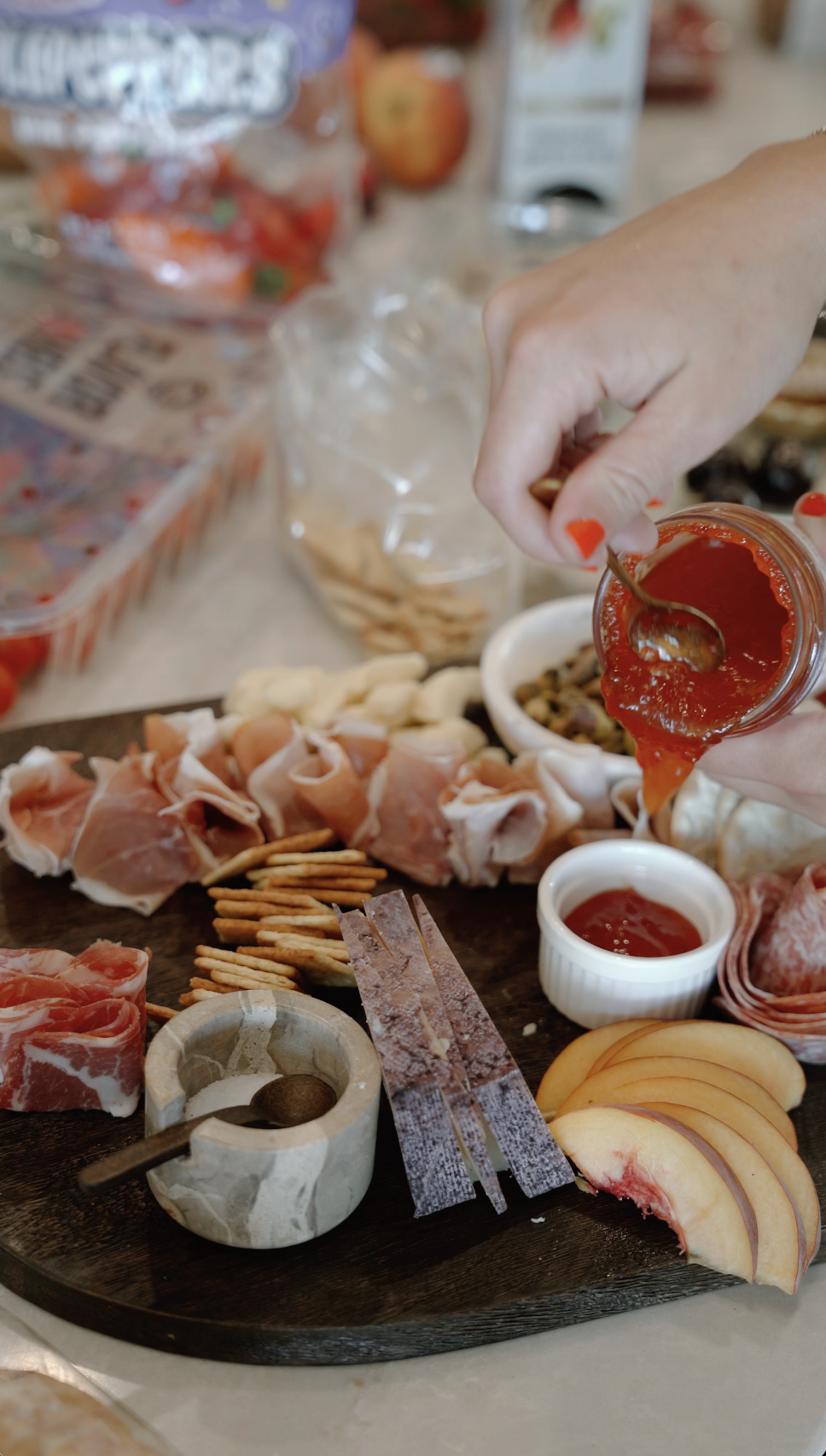
Jams, Dips + Honey: Spoon them into bowls, schmear them directly onto the board, drizzle them over other ingredients, or swirl flavors together.
Even the exact same ingredient styled two different ways can create more texture and visual interest without needing to add more food.
6. Fill the Gaps + Finish
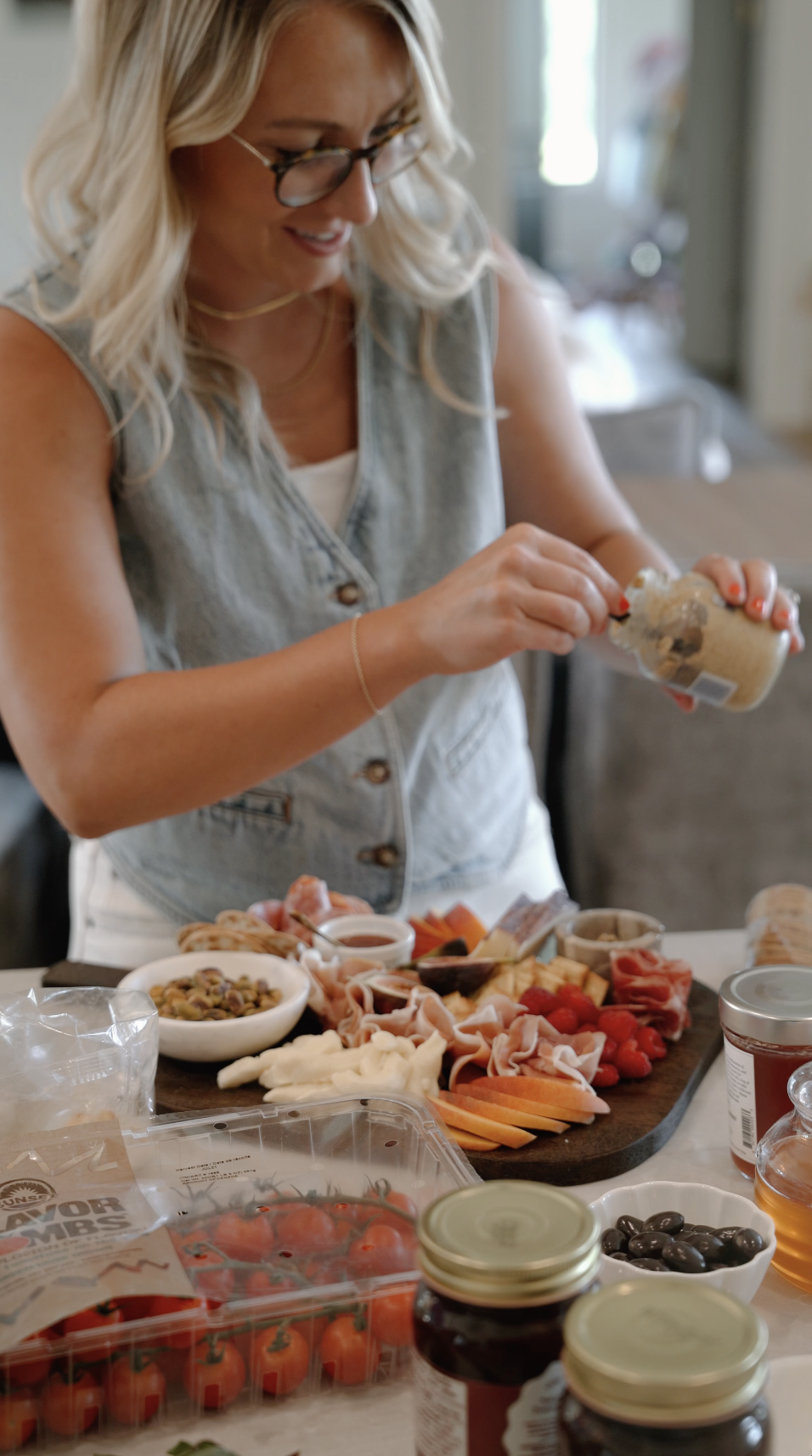
Now fill in the empty spaces. We used a mix of curved rows, small clusters, overlapping ingredients, and scattered pieces to keep everything feeling full without being perfectly structured.
Finish with the little details:
Fresh herbs (rosemary, thyme, basil)
A drizzle of honey, balsamic, or olive oil
Edible flower petals
Use nuts, berries, herbs, or other smaller ingredients to fill any awkward spaces, then add your serving utensils throughout.
The Biggest Thing We Learned
There really aren’t rules. Use these ideas as a starting point, then follow what you’re drawn to, what you think looks beautiful, and most importantly, what you actually want to eat.
It’s less about perfection and more about playing with food and creating something beautiful.
A charcuterie board is really just a beautiful mess, and that’s exactly the point.

If I Were Building One Again
If I wanted to keep things simple and make one board with some of my favorite ingredients from the day, I’d start here:
2–3 cheeses (Boursin or goat cheese, Parmesan block, bold looking herbed cheese)
2 meats (pepperoni, salami)
Fresh figs
Cherries & grapes
Cucumbers
2 interesting crackers
Pistachios
Grainy mustard and spicy jalapeño jam
Dark chocolate bar
Fresh rosemary for finishing
That’s it. Plenty of variety without needing 50 ingredients!
You’ll find more recipes like this in my original cookbook, Feeding the Nobles: Keep It Simple and Just Eat Real Food.
